
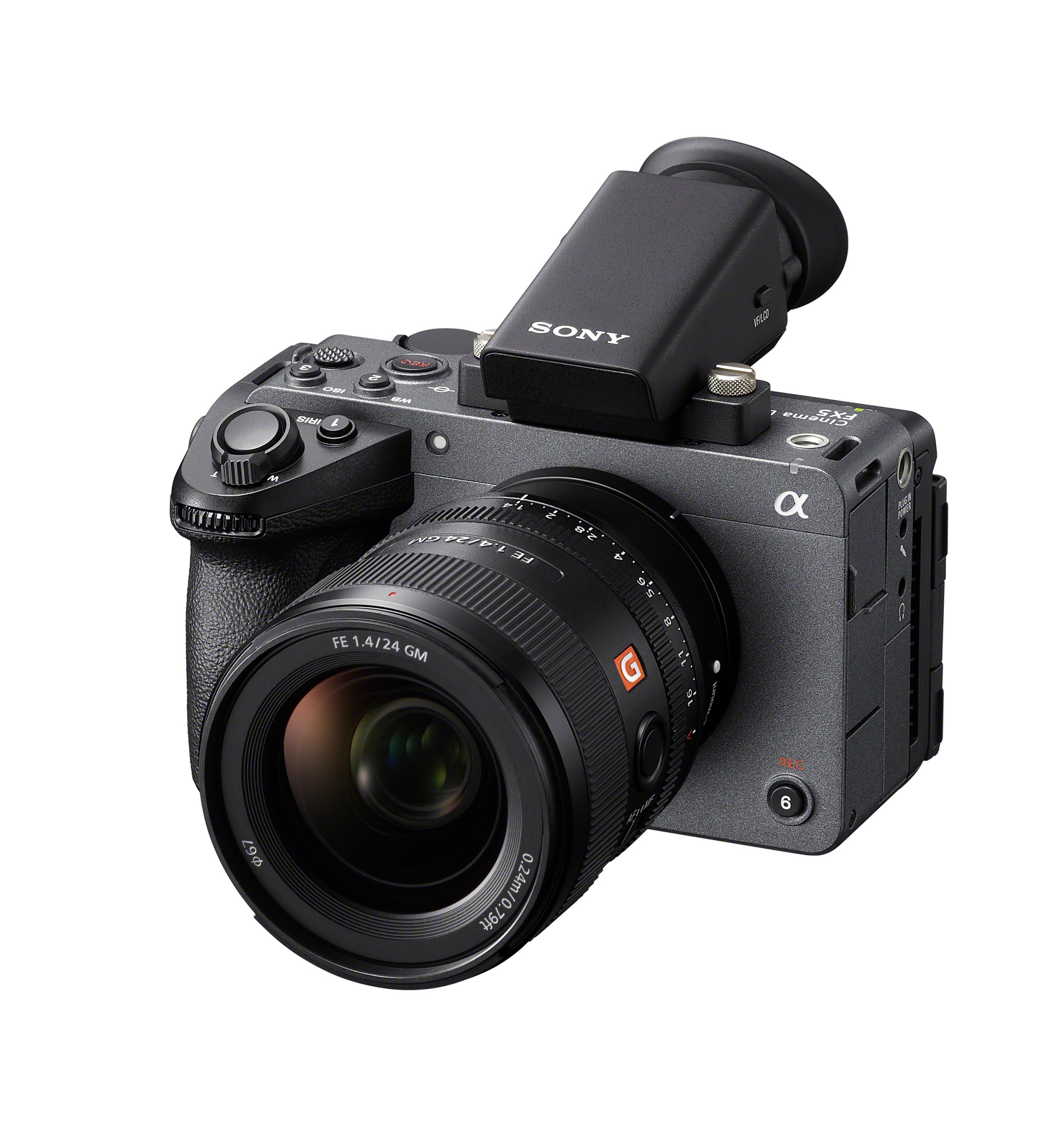
On July 22, 2026, Sony did something it had never done before: it put internal 16-bit RAW recording into a compact, sub-$5,000 Cinema Line body. The Sony FX5 isn't an FX3 Mark II and it isn't a mini-FX6 — it's a genuinely new tier that drops VENICE- and BURANO-class features into a camera one person can carry all day. If you've been searching "is the FX5 worth it," here's the working-filmmaker breakdown.
A paradigm shift for affordable digital cinema — with two real catches.
The FX5 gives you internal X-OCN RAW, 5K open-gate recording and a new triple base ISO in a ~$4,899 body, no external recorder required. The catches: the rumored global shutter didn't happen (it's a fast rolling shutter), and — oddly for a run-and-gun camera — there's no built-in ND. It's also video-only. For owner-operators who want RAW and open gate without a BURANO budget, nothing else at this price comes close.
Why the FX5 Is a Big Deal
Three features, previously locked to Sony's high-end CineAlta bodies, now live in a compact camera at a fraction of the price. Together they change what a small Sony can do.
1. Internal X-OCN RAW — the headline
This is the story. The FX5 records Sony's 16-bit scene-linear X-OCN RAW — the same codec family used on VENICE and BURANO — internally, in three compression tiers (LT, C1, C2). No Atomos, no external recorder, no SDI RAW rigging. Every other compact FX (FX3, FX30, FX6) needs an outboard box for RAW; the FX5 is the first Cinema Line camera in this class to do it in-body. For colorists and finishing-heavy work, that's transformative at this price.
2. 5K open-gate recording
The FX5 shoots 5K in the full 3:2 open-gate area up to 60fps — the whole sensor, no crop. Open gate is what modern productions want for maximum reframing, vertical/social deliverables and anamorphic workflows from a single take. It'll also do 5K 16:9 to 120p and 4K to 120p.
3. Triple base ISO + Dual Gain
A first for the FX line: three native base ISOs — 800, 4,000 and 12,800 — so you keep a clean noise floor across a huge lighting range. A new Dual Gain readout mode pushes dynamic range to a claimed 16+ stops (15+ native). Combined with the fast stacked sensor and the AI autofocus from the BIONZ XR2 processor, the imaging pipeline is a clear generation ahead of the FX3.
"Finally, a compact camera worthy of the Cinema Line name."
— Johnnie Behiri, CineDThe Honest Caveats
The FX5 is exciting, but it's not flawless — and a couple of the trade-offs matter more than the spec sheet lets on.
No global shutter, and no built-in ND.
The rumored global shutter didn't materialize. The FX5 uses a fast-readout stacked rolling shutter — much less skew than an FX3, but not the jello-free global shutter some leaks promised (Sony hasn't published an exact readout figure yet). And surprisingly for a run-and-gun body, there's no built-in ND filter — you'll be running matte-box or screw-in NDs, where an FX6 just spins a dial.
A few more to weigh:
- Video only — the FX5 has no stills/photo mode at all. If you need photo + video in one body, that's the Alpha line's job (a7 V, a7R VI).
- The EVF is optional — the detachable tilting DVF-EL1 viewfinder is a ~$699 add-on, and it can't be mounted at the same time as the XLR audio handle. You pick one.
- Some top frame-rate modes are firmware-gated — reviewers note certain high-frame-rate modes are tied to a later firmware update rather than shipping day one.
Sony FX5 vs FX3 vs FX6
This is the comparison flooding the search results right now — the FX5 lands right between the two most popular Sony cinema bodies on price ($4,900, between the FX3 at ~$3,900 and the FX6 at ~$6,000), so where does it actually win?
| Feature | FX3$3,900 B&H ↗ |
FX5$4,900 · NEW B&H ↗ |
FX6$6,000 B&H ↗ |
|---|---|---|---|
| Sensor | 12MPfull-frame |
16.6MPFF · stacked |
10.2MPfull-frame |
| Base ISO | 800/ 12,800 |
8004K · 12.8K (×3) |
800/ 12,800 |
| Max Video | 4K120full-frame |
5K60open gate · 4K120 |
4K120internal |
| Internal RAW | External4.2K |
InternalX-OCN |
ExternalSDI / BRAW |
| Built-in ND | – | – | ✓2–7 stops |
| IBIS | ✓ | ✓ | –gyro data |
| Built-in EVF | – | –optional | – |
| Price (body) | ~$3,900 |
~$4,900 |
~$6,000 |
FX5 vs FX3 — is it worth the extra ~$1,000?
If RAW and open gate matter to you, yes. The FX3 is a proven, Netflix-approved low-light A-cam, but its RAW is external-only and it tops out at 4K. The FX5 adds internal X-OCN RAW, 5K open gate, triple base ISO and a newer stacked sensor for about a grand more. The FX3 still wins on pure low-light pedigree and price, and it's the safer buy if you never touch RAW. But the FX5 is the bigger creative leap.
FX5 vs FX6 — the real decision
This is the tougher call, and it comes down to internal RAW vs built-in ND. The FX5 gives you internal X-OCN RAW, 5K open gate and IBIS the FX6 lacks — for $1,100 less. The FX6 gives you the one thing the FX5 doesn't: a built-in variable ND filter, plus heavier pro I/O (12G-SDI, timecode) and a more established run-and-gun body. For controlled/narrative shoots where you rig NDs anyway, the FX5 is the smarter buy. For fast doc and event work in constantly changing light, the FX6's built-in ND still earns its keep.
Who Should Buy the Sony FX5
- Owner-operators and indie DPs who want VENICE-family internal RAW and open gate without a BURANO budget.
- Narrative & commercial shooters doing finishing-heavy, gradeable work where 16-bit RAW pays off.
- Anyone already lit or running a matte box, for whom the missing built-in ND is a non-issue.
- FX3 owners wanting a serious image upgrade — or a matched, RAW-capable second body.
Who should skip it: run-and-gun doc/event shooters who live off a built-in ND dial (get the FX6), hybrid shooters who also need stills (get an Alpha), and anyone who specifically needed that rumored global shutter (that's the a9 III's territory).
Price, Availability & Where to Buy
The Sony FX5 is $4,899.99 body-only in the US (about $5,499 kitted with the XLR handle; the optional DVF-EL1 EVF adds roughly $699). It was announced July 22, 2026 and ships mid-August 2026. It's already listed for pre-order:
Check the Sony FX5 at B&H Photo ↗
Sony FX5 FAQ
Is the Sony FX5 a global shutter camera?
No. Despite pre-launch rumors, the FX5 does not have a global shutter. It uses a newly developed full-frame stacked Exmor RS sensor with a very fast readout that greatly reduces rolling-shutter skew — but it's still a rolling-shutter sensor.
Does the Sony FX5 record RAW internally?
Yes — 16-bit X-OCN RAW internally, in three tiers (LT/C1/C2). It's the first compact FX Cinema Line camera with internal RAW, previously a BURANO/VENICE-only feature.
Does the Sony FX5 have built-in ND filters?
No. Unlike the FX6 and FX9, the FX5 has no built-in electronic ND — you'll need screw-in or matte-box ND filters.
Can the Sony FX5 take photos?
No, it's a video-only cinema camera with no stills mode. For photo + video, look at Sony's Alpha line (a7 V, a7R VI).
Does the Sony FX5 have IBIS?
Yes — 5-axis in-body stabilization, which the FX6 and FX9 don't have.
The FX5 is one piece of a much bigger picture. For where it sits against every other Sony body — from the FX30 to the VENICE 2, plus the Alpha hybrids — see our complete Sony camera guide for filmmakers & hybrid shooters.